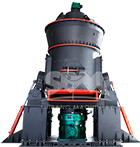
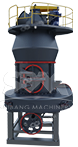
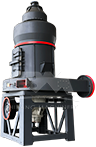
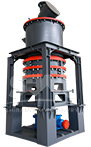
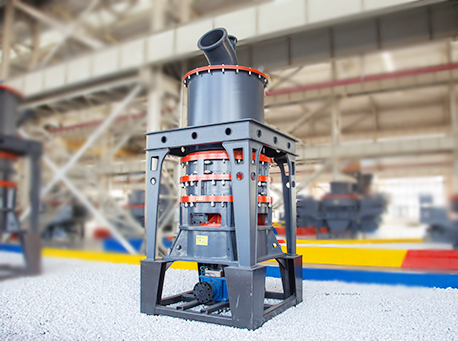
Abstract : Compared to the energy consumption disadvantages of traditional mills, this article details the 20%-30% energy-saving advantages of SBM’s PMD permanent magnet direct-drive mill. It features built-in intelligent remote monitoring and control, is suitable for grinding various types of ore, and offers a free calculation of the payback period for energy-saving retrofits.
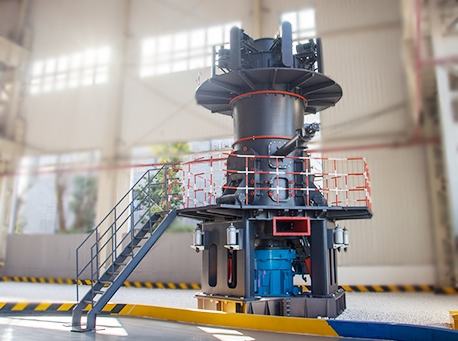
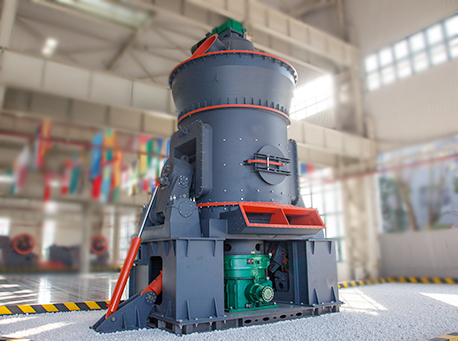
In the powder processing industry, electricity costs account for more than 30% of production costs. Long-term use of high-energy-consumption equipment directly erodes corporate profits, and environmental protection and energy-saving policies across various regions are driving processing plants to replace their equipment with low-energy-consumption mills. Traditional mills driven by asynchronous motors suffer from high transmission losses, whereas the SBM PMD Permanent Magnet Direct-Drive Smart European Powder Mill employs an industry-first permanent magnet synchronous direct-drive structure, significantly reducing the overall energy consumption of the machine.
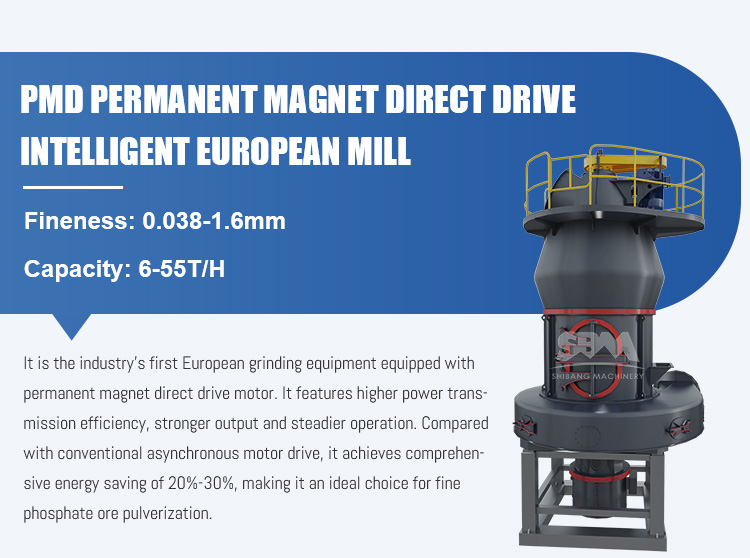
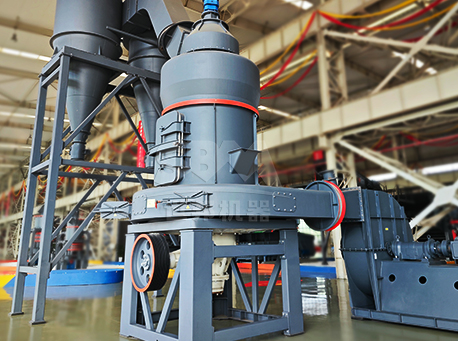
The PMD model eliminates complex intermediate transmission components, enabling zero-distance direct drive between the permanent magnet motor and the main shaft, resulting in virtually zero power loss during transmission. Its low-speed, high-torque output characteristics are optimized for the mill’s load, achieving comprehensive energy savings of 20%–30% compared to traditional drive mills. A powder processing plant with an annual output of 100,000 metric tons can save hundreds of thousands in electricity costs each year. Paired with a new high-efficiency blower, pneumatic energy efficiency is improved by 15%, further reducing the system’s overall power consumption.
The equipment is equipped with a new high-precision classifier that offers superior sealing and stable airflow, enabling precise control of the final product’s particle size. It eliminates issues such as coarse particles escaping or fine powder loss, thereby improving the product pass rate and reducing the additional energy consumption caused by re-grinding. The entire machine features intelligent connectivity, allowing for remote monitoring, fault alerts, and parameter adjustments via a mobile app, enabling digital production management and reducing labor costs.
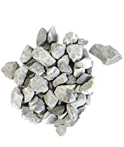
Available in four models—PMD150, PMD185, PMD198, and PMD218—with hourly capacities ranging from 6 to 55 metric tons, a maximum feed size of 50 mm, and a finished product fineness of 0.038–1.6 mm, the system can process various common ores such as limestone, quartz, pulverized coal, dolomite, and barite. The entire system features a negative-pressure closed-loop dust collection system, ensuring a dust-free and environmentally friendly operation that meets dual energy-saving and environmental protection audit standards across all regions.
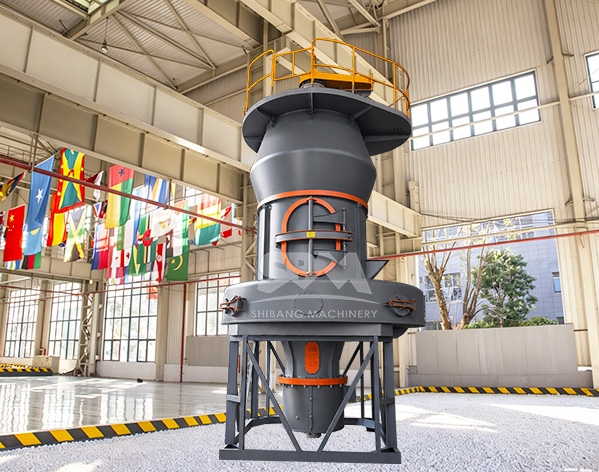
Many customers are unclear about the difference in initial purchase cost between permanent magnet direct-drive mills and traditional mills, as well as the long-term energy savings, making it difficult to determine whether upgrading the equipment is worthwhile. To compare the electricity costs per metric ton and payback periods between traditional mills and PMD permanent magnet mill, simply send your raw material details and daily output via Business Messenger. SBM’s technical team will provide an energy consumption comparison spreadsheet and develop a free energy-saving retrofit plan.